
Marketing Attribution in 2026: Why Last-Click Logic Doesn’t Work Anymore
Accurate marketing attribution is the cornerstone of successful digital marketing — especially in healthcare. With increasing competition and the rapidly evolving digital and online landscape, it’s more important than ever that, as a healthcare business, you know where your sales come from. This allows business owners and marketing professionals to make smart business decisions based on data and not just hunches.
Traditionally, many advertisers and marketers have relied on last-click attribution. It’s been the default way to measure marketing results for many years. It essentially means assigning 100% of the credit for a conversion or sale to the final touchpoint or the last traffic source before the conversion officially happens.
Last-click attribution provides a simple way to measure marketing and advertising performance and has been the go-to standard in the industry. However, relying solely on last-click attribution can lead to distorted reporting — especially when making budget allocation or long-term strategy decisions.
Let’s take a deeper dive into what marketing attribution is, what last-click attribution means, and why it may not work anymore in 2026.
What Is Marketing Attribution?
Marketing attribution determines which marketing activities influence a customer to convert or make a purchase. At its very core, marketing attribution is the process of figuring out what marketing efforts are driving results and contributing to sales and conversions.
The goal of marketing attribution is to assign value to different touchpoints of the customer journey, determining which channels contribute to the bottom line of your business. As a business owner and marketer, the process of marketing attribution determines which channels, messages, and marketing efforts impact a customer’s decision to purchase or convert.
This provides useful insights into how, when, where, and why a customer interacts with marketing messages, helping optimize marketing efforts and guide smarter business decisions.
The Importance of Marketing Attribution
Marketing attribution is more than just tracking marketing performance. It’s about interpreting data and understanding how those numbers reflect on your business’s marketing efforts. Marketing attribution plays an important role in evaluating and refining your marketing campaigns and efforts.
✅Better insights into marketing campaigns
More than just performance tracking, marketing attribution allows business owners and marketing teams to get a better picture of how their marketing and advertising campaigns perform and help their bottom line. Understanding how each marketing message, campaign, and channel contributes to conversions.
✅Maximize ROI
Improved ROI can contribute to increased profitability. Effective marketing attribution allows marketers to determine which channels and messages impact customer decisions and deliver the highest conversion rates.
✅Improve marketing budget allocation and optimize marketing spend
The process of marketing attribution gives marketers useful insights into marketing performance, allowing them to determine the different touchpoints in the customer journey that encourage purchase and conversion. This allows teams to adjust budget allocation.
✅Improve campaign and messaging personalization
Data and insights from marketing attribution allow marketers and business owners to understand how certain campaigns and messages speak to customers. This allows them to personalize marketing messages and improve campaign strategies to meet customer needs and meet them where they are.
✅Product and service improvement
Effective marketing attribution allows business owners and marketers to understand their customers and their needs better. This provides opportunities to improve products and services to target the customers’ wants and needs.
Common Models of Marketing Attribution
Here’s a quick overview of the common models and different types of marketing attribution many businesses use:
- First-Click Attribution attributes conversion credit solely to the first interaction.
- Last-Click Attribution attributes conversion credit to the last interaction.
- Linear Attribution attributes conversion credit equally across all customer journey touchpoints
- Time-Decay Attribution attributes increasing credit to touchpoints as they move closer to conversion.
- Multi-Source Attribution attributes conversion credit across multiple touchpoints in the customer journey.
What Is Last-Click Attribution?
Last-click attribution is a common marketing attribution model that has long been the default model for measuring marketing results and campaign performance.
Last-click attribution–also called last-touch attribution–is a marketing attribution model that assigns 100% of the credit to the final touchpoint before a customer converts or makes a purchase. In the most basic sense, last-click attribution attributes credit to the final customer interaction before the conversion, regardless of the rest of the journey and touchpoints that brought them there.
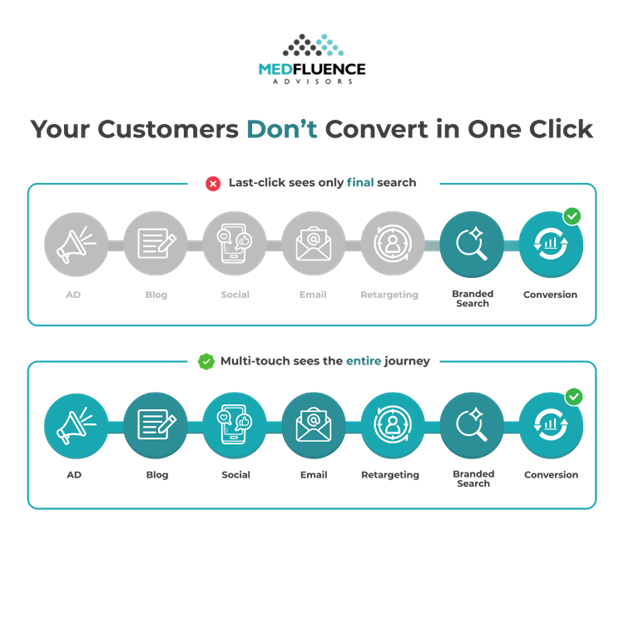
For example, a customer sees one of your ads on Facebook, visits your site, signs up for a newsletter, and finally converts upon seeing one of your Google ads. With the way last-click attribution works, the Google ad, which is the customer’s last interaction before the conversion, gets 100% of the conversion credit, regardless of the earlier interactions and the rest of the customer journey before this final touchpoint.
Why Last-Click Became the Standard Marketing Attribution Model
But why did last-click attribution become the industry standard in measuring marketing performance?
It’s simple, accessible, and easy to understand
The answer to the question is simple: because last-click is the simplest way to measure performance. Using last-click attribution to measure and understand ad and marketing performance is straightforward because you simply credit the last touch before the conversion.
For years, it’s the default setting used in many ad and analytics platforms, such as Google Ads, Meta, and Google Analytics 4. Because many marketing platforms use this tool to analyze and report performance, making them accessible and easy to understand for most teams.
It respects privacy
Last-click attribution relies on tracking the final touchpoint before a conversion, without tracking individual customer journeys. Last-click attribution may rely on more limited and anonymous tracking data to connect conversions to final touchpoints and marketing campaigns. When implemented properly and in compliance with existing privacy regulations, it can be utilized without compromising the customer’s privacy.
It helps optimize bottom-of-funnel strategies
Attributing a conversion to a single touchpoint provides clear and immediate feedback on ad and marketing campaigns. Last-click attribution gives marketers and business owners a clearer view of performance, allowing them to retarget, readjust, optimize, or refocus their campaigns where needed.
When Last-Click Attribution Works
Last-click attribution works and holds value when used in the right setting and context.
For example, the last-click attribution model works well for short-cycle sales (with one or two touchpoints in the entirety of the customer journey) and direct conversions (where customers convert quickly), as it clearly connects a single action to the conversion.
Let’s say a customer clicks on a Google ad and decides to purchase or convert immediately. In this case, the last-click touchpoint truly gets 100% of the conversion credit.
Why Last-Click Attribution Is Failing
Last-click attribution isn’t dead. However, this straightforward attribution model also has downsides. Here are instances when last-click doesn’t work:
It ignores the full customer journey
As the name suggests, last-click attribution focuses solely on the final touchpoint before the conversion. In marketing, customers go through a process before deciding to convert or make a purchase. They go through several other touchpoints before the conversion. Focusing only on the final touchpoint neglects the rest of that customer journey.
Any stage that first sparked their interest or introduced your business to them won’t receive conversion credit unless it’s the last touchpoint in that customer journey.
It doesn’t value your top-of-funnel strategies
Your top-of-funnel strategies–or the marketing efforts that create awareness of your brand or business–often play an important role in the entire customer journey. However, last-click attribution neglects that and fails to value the top of your funnel strategies.
Awareness campaigns (video ads and social media campaigns) and educational content (blog content or educational short-form videos) that help create initial brand awareness aren’t reflected and credited in the last-click attribution model. This might make it difficult for marketers to justify budget allocations for top-of-funnel strategies to stakeholders.
It doesn’t work for long sales cycles or complex customer journeys
While last-click attribution works well for short-cycle sales and direct conversion, it doesn’t work for long sales cycles or complex customer journeys.
In businesses that have long or complex sales cycles and customer journeys, focusing only on last-click attribution provides inadequate information on marketing performance. Because it only looks at and gives credit to one single and final interaction, it misses the many touchpoints and the long journey the customer took from awareness and education to conversion.
It gives a limited and one-dimensional insight into campaign performance
Last-click attribution often gives marketers and business owners a limited and one-dimensional insight into marketing and campaign performance. Because marketers are focusing on the final touchpoint, marketing messaging and efforts are geared toward people who are ready to convert. This creates missed opportunities for marketing efforts geared toward brand awareness, targeting a wider audience who might convert with the right messaging.
It complicates cross-device tracking and multi-touch campaigns
Customers may interact with your campaign on one device, but may switch to another device and convert there. The last-click attribution model only considers the last touch on that device, ignoring the earlier activity on another device. This gives inadequate information and creates gaps in data, which affects your performance report.
In addition to that, if your brand or business utilizes multiple channels in your marketing campaigns, such as social media, Google, and email, it doesn’t show the full picture of how all these channels work together to drive sales and conversions.
It can potentially lead to poor budget allocation
Lastly, because last-click attribution gives 100% of the conversion credit to the final touchpoint, it may give misleading campaign performance reports.
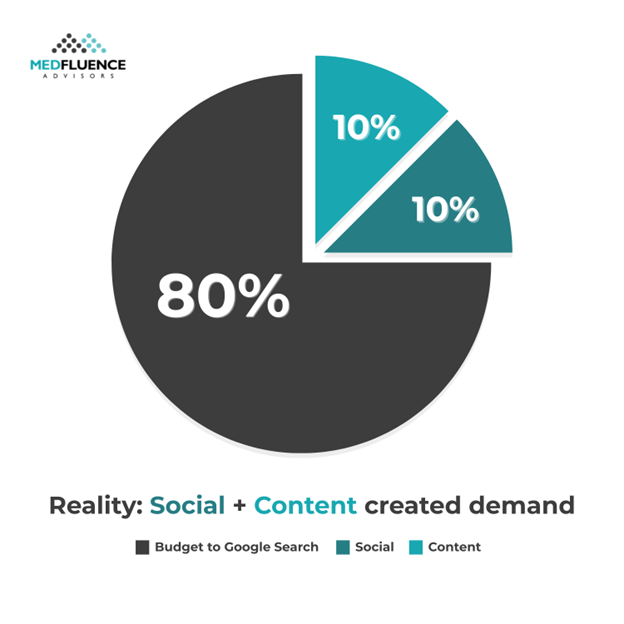
Marketers and business owners might make the mistake of over-investing in channels credited for the last-click, thinking that they’re what solely drives conversions, ignoring all the other touchpoints and customer journeys that lead to the sale, purchase, or conversion.
Aside from over-investing in certain marketing channels, it may be difficult to justify budget allocations that were also important parts of driving conversions but were not credited for them.
Getting the Full Picture: Alternatives to Last-Click Logic
It’s not that last-click logic is “bad”. It’s that on its own, last-click attribution is not enough. While it may provide some context into marketing campaign performance, it might need the help of other attribution models to paint a clearer and fuller picture.
Here are some alternatives to last-click attribution or models you can use alongside it:
1. Linear attribution
Linear attribution model splits conversion credit evenly across all touchpoints of the customer journey, not just the first or last click. For example, if a customer interacts with four channels before converting, each channel gets 25% of the conversion credit.
It’s the ideal attribution model for marketing campaigns that utilize multiple channels, as it recognizes the collective marketing effort and gives a fuller picture of the campaign performance.
2. Multi-touch attribution
Multi-touch attribution model spreads and splits conversion credit across multiple touchpoints using set rules or logic as set by the marketing team based on data.
It’s an ideal attribution model for brands and businesses that run multi-channel marketing campaigns. It allows them to monitor the performance of each channel and provide insight into how all touchpoints contribute to the conversion. It provides individual-level insight into each marketing channel, allowing relevant teams to act quickly should it be needed.
3. Time decay attribution
Time decay attribution model gives conversion credit to all touchpoints in the customer journey. However, this model gives more credit to touchpoints and interactions that occur closer to the conversion.
The first touchpoint gets less conversion credit, while the last touchpoint gets the most conversion credit. This model gives priority to touchpoints and interactions that push people to convert.
4. Position-based attribution
Position-based attribution, also known as U-shaped attribution, gives the most credit to the first and last touchpoints of the customer journey before the conversion, while the rest of the credit is spread across the middle touchpoints. Touchpoints that help a customer discover your business and convert into a paying customer would receive more weight and credit.
It’s a great model for businesses that want to focus on brand discovery and closing, without neglecting the rest of the touchpoints.
5. Data-driven attribution
Data-driven attribution model uses machine learning systems and data patterns to estimate which touchpoints are likely to influence conversion. If marketing campaign data shows more successful conversions in certain channels, then they will assign more conversion credit to those touchpoints and interactions.
Conclusion: The Future of Marketing Attribution in 2026
To truly understand your marketing campaign’s performance, it’s important to focus on the fuller picture and understand how different touchpoints in the customer journey drive sales and impact growth.
For businesses that solely rely on last-click attribution, it’s time to evolve and move away from the thinking that the last touchpoint is the only thing that matters.
In 2026, last-click attribution alone is no longer sufficient. Organizations that adopt blended, data-informed attribution models will make smarter budget decisions, optimize campaigns more effectively, and gain a true understanding of what drives growth.

Worried your marketing might bring in more than your team can handle—or worse, the wrong kind of leads? That’s not a growth plan—it’s a…

Businesses and marketing professionals love seeing numbers go up. Rising charts and upward trends feel like progress—and sometimes they are.…