
How Microcopy Shapes Patient Behavior (and Where You’re Getting it Wrong)
A Single Word Can Change Patient Action
A patient stares at a colonoscopy prep form, unsure whether to click the button labeled “Submit.” The wording seems simple enough, but hesitation sets in immediately:
Did they complete everything correctly?
Will the clinic receive the right information?
What happens after they click?
That small moment of uncertainty may seem insignificant, but in healthcare, these micro-moments matter. Patients regularly pause, abandon tasks, or contact staff because instructions, buttons, and messages feel unclear, overly clinical, or emotionally loaded.
This is where microcopy matters.
Microcopy refers to the small pieces of text that guide users through digital experiences — button labels, form instructions, confirmation messages, reminders, and error notifications. While often overlooked, these tiny language decisions directly influence patient behavior, follow-through, and confidence.
In healthcare, where patients may already feel anxious, overwhelmed, or cognitively overloaded, the wrong wording can create friction that delays care, increases support calls, or reduces treatment adherence.
The difference between “Submit” and “Start My Prep” is not just semantic. It changes how the patient experiences the task itself.

What Is Healthcare Microcopy?
Healthcare microcopy includes the short instructional language patients interact with every day across:
- Patient portals
- Appointment scheduling systems
- Intake forms
- Pre-procedure instructions
- Automated reminders
- Billing systems
- Telehealth platforms
Examples include:
- Button labels
- Confirmation messages
- Error alerts
- Navigation prompts
- Appointment reminders
- Form instructions
These small pieces of language shape how patients move through healthcare experiences. When microcopy is confusing or overly clinical, patients hesitate. When it is clear and actionable, patients move forward confidently.
Why Cognitive Load Matters in Healthcare
Healthcare environments naturally create stress. Patients may already be anxious, distracted, uncomfortable, or processing large amounts of information.
This increases cognitive load — the amount of mental effort required to process information and make decisions.
When cognitive load becomes too high:
- comprehension decreases
- mistakes increase
- follow-through drops
- patients abandon tasks
- support calls rise
Healthcare systems unintentionally increase cognitive load through:
- medical jargon
- vague instructions
- inconsistent terminology
- long paragraphs
- ambiguous calls-to-action
For example:
High-Friction Copy:
“Procure Lab Order”
Clearer Alternative:
“Get Your Blood Test”
The second version removes interpretation. Patients immediately understand the action and next step.
Research in healthcare UX consistently shows that simplifying patient-facing language improves comprehension, confidence, and engagement — especially for patients with lower health literacy.
And that matters. Nearly 36% of U.S. adults have basic or below-basic health literacy, making clear communication a clinical and operational priority.
Common Healthcare Microcopy Mistakes
1. Using Clinical or Administrative Language
Healthcare organizations often write interfaces using internal terminology instead of patient language.
Examples like:
- “Initiate Diagnostic Sequence”
- “Procure Lab Order”
- “Complete Intake Verification”
force patients to mentally translate terminology before acting.
Clearer alternatives reduce friction immediately:
- “Schedule Your Scan”
- “Get Your Blood Test”
- “Finish Your Check-In”
Patients should never need to decode instructions before taking action.
2. Vague Buttons and Calls-to-Action
Buttons labeled:
- “Submit”
- “Continue”
- “Complete”
often create uncertainty because patients do not know what happens next.
More specific language improves clarity:
- “Start My Prep”
- “Confirm My Appointment”
- “View My Results”
Action-oriented wording reduces hesitation and reinforces patient confidence.
3. Anxiety-Inducing Confirmation Messages
Healthcare interfaces frequently use warning-heavy language:
“Are you sure you want to cancel your appointment?”
While technically accurate, this wording can increase stress and second-guessing.
A better alternative provides context:
“You’re about to cancel your visit. Here’s what happens next.”
This keeps the patient informed without creating unnecessary anxiety.
4. Dense Instructions
Long paragraphs increase cognitive friction — especially during stressful moments like pre-procedure preparation.
Instead of large instructional blocks, patients respond better to:
- checklists
- step-by-step formatting
- clear headings
- action-focused language
For example:
Instead of:
A dense paragraph explaining bowel prep timing.
Use:
- Day Before: Drink Prep Solution
- Midnight: Stop Solid Foods
- Morning Of: Clear Liquids Only
The information remains accurate while becoming easier to process quickly.
How Microcopy Influences Patient Behavior
Behavioral science shows that people are more likely to complete tasks when actions feel:
- clear
- achievable
- low effort
- personally relevant
Microcopy shapes all four.
Even subtle wording changes can influence:
- appointment attendance
- form completion
- prep compliance
- portal engagement
- patient confidence
For example:
“Appointment”
vs.
“Your Visit”
The second version feels more personal and contextual.
Similarly:
“Submit”
vs.
“Start My Prep”
The revised version reframes the action as a beginning rather than a vague system process.
These changes may appear small, but they reduce hesitation and create smoother patient experiences.
The ROI of Better Healthcare Microcopy
Microcopy is not simply a UX detail. It affects measurable operational outcomes.
Clearer patient communication may help healthcare organizations:
- reduce support calls
- improve portal engagement
- lower no-show rates
- reduce patient confusion
- improve prep adherence
- streamline workflows
- improve patient satisfaction
Poorly written interfaces create avoidable friction that consumes staff time and interrupts care workflows.
Clear communication reduces that friction.
And unlike large technology overhauls, improving microcopy often requires only modest operational effort while delivering meaningful improvements in patient experience.
A Simple 3-Step Microcopy Audit for Healthcare Practices
Healthcare organizations can begin improving patient communication immediately by auditing high-friction language areas.
Step 1: Identify Friction Points
Review:
- forms
- buttons
- instructions
- reminders
- confirmation messages
Look for wording that feels:
- vague
- overly clinical
- intimidating
- unclear
Step 2: Simplify the Language
Replace jargon and ambiguous language with:
- direct actions
- patient-centered wording
- shorter instructions
- contextual guidance
Examples:
- “Submit” → “Start My Prep”
- “Appointment” → “Your Visit”
- “Procure Lab Order” → “Get Your Blood Test”
Step 3: Add Behavioral Guidance
Patients respond well to:
- progress indicators
- next-step explanations
- supportive reminders
- contextual messaging
For example:
“You’re Almost Done”
or
“Here’s How to Prepare for Your Visit”
These small nudges reduce uncertainty and improve follow-through.
Why This Matters More Than Ever
Healthcare organizations are investing heavily in:
- patient portals
- automation
- online scheduling
- digital intake systems
- telehealth experiences
But technology alone does not improve patient experience.
Patients experience healthcare through language.
Every button, instruction, reminder, and confirmation message either:
- creates friction
or - removes it.
The practices that improve digital communication will not only improve patient experience — they will improve operational efficiency, patient engagement, and long-term trust.
How Medfluence Advisors Helps Healthcare Practices Reduce Patient Friction
At Medfluence Advisors, we help healthcare organizations optimize patient communication, digital workflows, and healthcare UX using behavioral strategy and patient-centered messaging principles.
Our work focuses on:
- reducing patient friction
- improving conversion and follow-through
- simplifying digital experiences
- strengthening patient engagement
- improving healthcare communication systems
From patient portals and intake workflows to appointment systems and procedure instructions, small language improvements can create measurable operational and patient experience gains.
Final Thought: Words Shape Behavior
Microcopy may seem small, but its impact is not.
A single confusing button label can create hesitation. A clearer phrase can guide action confidently.
In healthcare, where stress and cognitive overload are already high, intentional language matters. Patients respond when communication feels simple, actionable, and human.
The healthcare organizations that recognize this will create smoother patient experiences — not through bigger systems, but through better communication.
If your patient experience includes unnecessary friction, unclear messaging, or confusing workflows, Medfluence Advisors can help identify where patients disengage and how to improve the experience.
Schedule a strategy conversation with Medfluence Advisors today.

Organic reach is a very powerful tool for businesses’ growth and success, including those in the healthcare industry. A well-crafted and smart social…
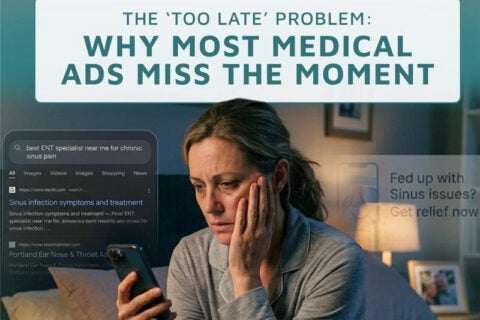
It’s 11:42 p.m. The house is quiet, but the patient isn’t. She’s propped up in bed, one hand pressed against her cheek, the other scrolling…